
Grocery budgeting
Seasonal eating to save money
In-season produce is cheaper for a boring reason: there is too much of it. Here is how to shop that way without memorising a calendar.
By Joao Dunlap · · 4 min read
The short version
- You do not need a seasonal calendar. The price tag already tells you.
- Whatever is cheapest and piled highest is in season. That is the whole method.
- Some vegetables are cheap year-round — build the base of the week on those.
- Frozen is picked in season and frozen immediately, which is why it stays cheap.
Seasonal eating gets presented as something you need a chart for. You do not. Supply and price move together, so the shop is already telling you what is in season — the thing that is cheap this week and piled up near the entrance is the thing there is too much of.
Buying that way saves money for a genuinely simple reason: out-of-season produce has been either stored for months or flown in, and both cost money that ends up on the label.
The method, without a calendar
- 1
Walk the produce section before deciding anything
Two minutes, looking only at prices. Whatever is unusually cheap this week is in season somewhere near you.
- 2
Pick two seasonal vegetables, not six
Two used properly across several meals beats six used once each. This is the same rule that keeps waste down.
- 3
Slot them into shapes that accept anything
A traybake, a soup and a stir-fry will take essentially any vegetable. Plan the shape, buy the vegetable, and the plan never breaks.
- 4
Keep the year-round base underneath
Onions, carrots, cabbage and potatoes barely move in price and keep for weeks. At $3.49, $2.29 and $2.49 they are the floor of the week regardless of season.
What to expect through the year
Rough guidance rather than a rule — growing seasons vary considerably by region, and your own shop's prices are always the better signal.
| Season | Usually cheap | How to use it |
|---|---|---|
| Spring | Greens, spring onions, radishes, early herbs | Fast cooking. Stir-fries and eggs |
| Summer | Courgette, tomatoes, peppers, beans, berries | Traybakes and sauces. Freeze the surplus |
| Autumn | Squash, apples, brassicas, root vegetables | Roasting and soups. The cheapest season of all |
| Winter | Cabbage, carrots, potatoes, onions, leeks | Stews and traybakes. All of it keeps for weeks |
| Year-round | Onions, carrots, potatoes, cabbage, frozen veg | The base of every week, whatever the month |
Frozen is seasonal eating
This is the part usually left out. Frozen vegetables are picked at peak season and frozen within hours, which is exactly why they cost less and why they hold their nutrients. Frozen broccoli at $1.49 against fresh at $3.48 is not a compromise — it is in-season produce sold in January.
- Buy fresh what is abundant this week, and buy frozen for everything else.
- Freeze your own surplus when something is very cheap — chopped peppers and courgette freeze well for cooked dishes.
- Frozen berries are dramatically cheaper than fresh out of season and identical once cooked or blended.
Recipes that take any vegetable
Shapes rather than fixed dishes — swap in whatever was cheapest this week. From the NeatEat library, which re-prices the week when you swap a meal.
 40 min
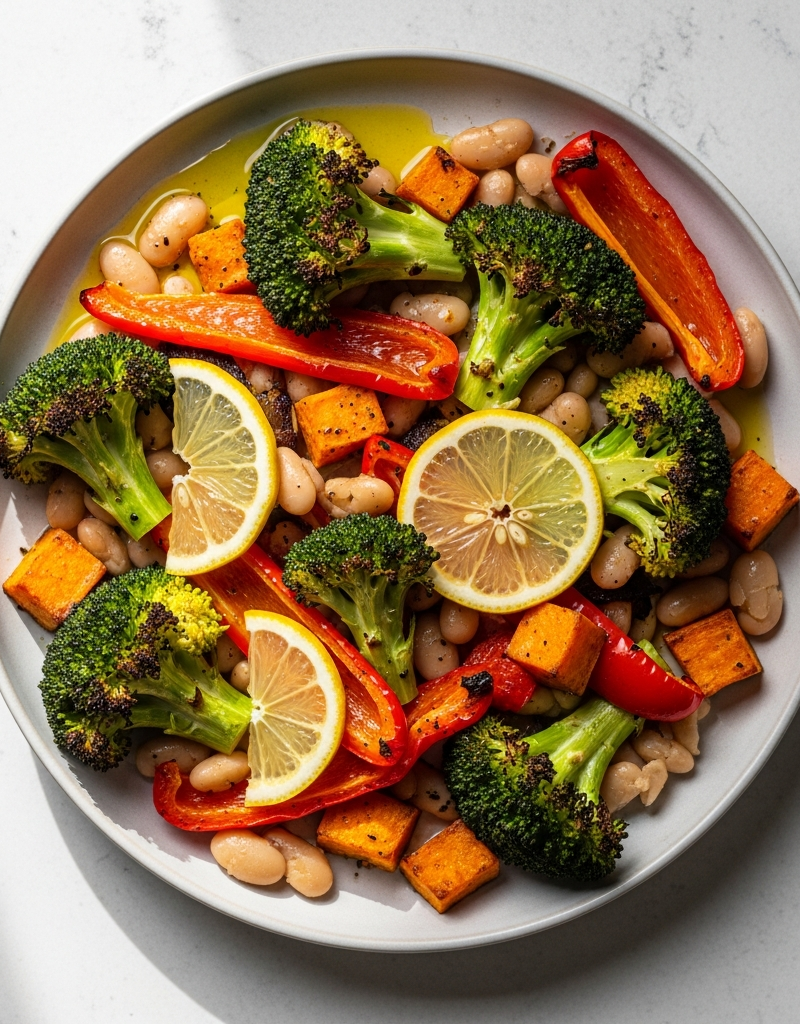
Roasted Vegetable and White Bean Traybake
No meat, no pans, no effort.
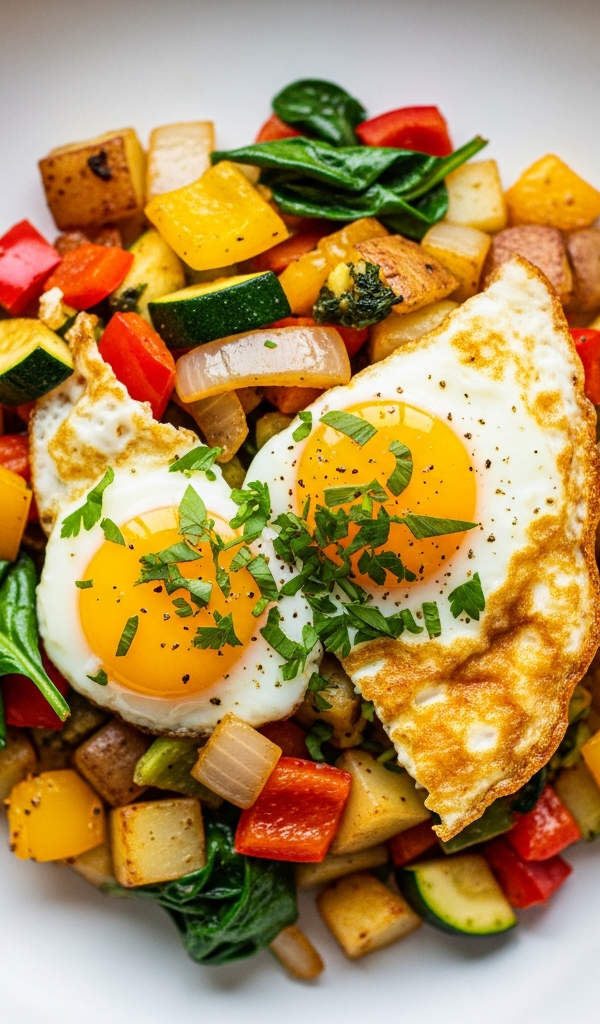 20 min
Egg and Vegetable Skillet Hash
Uses up whatever vegetables are left. 31g protein.
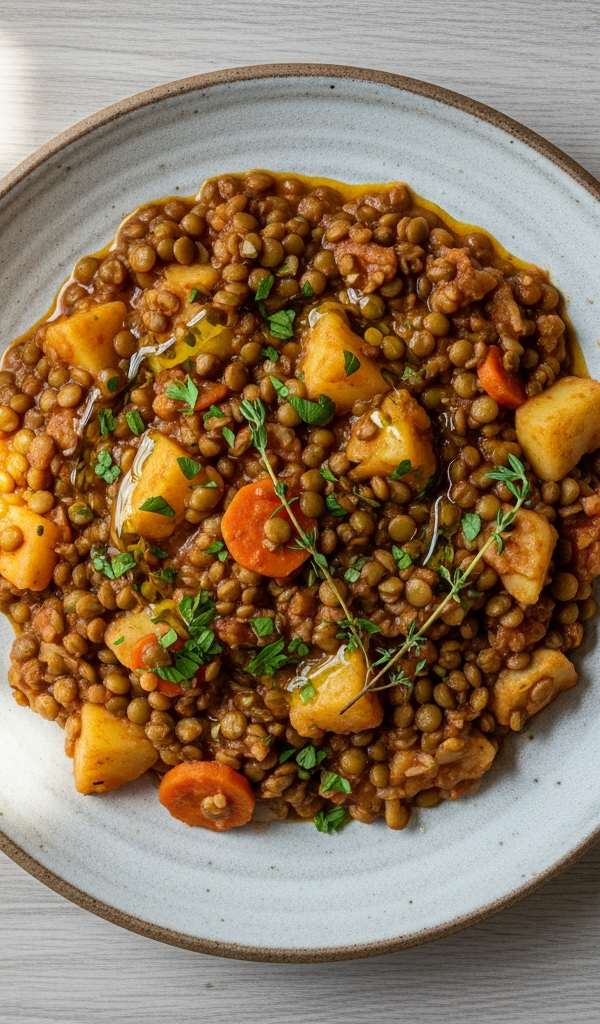 20 min
Hearty Potato and Lentil Stew
Makes dinner and the next day's lunch in one pot.
 45 min
Greek Chicken and Vegetable Traybake
Everything roasts together. One thing to wash.
 20 min
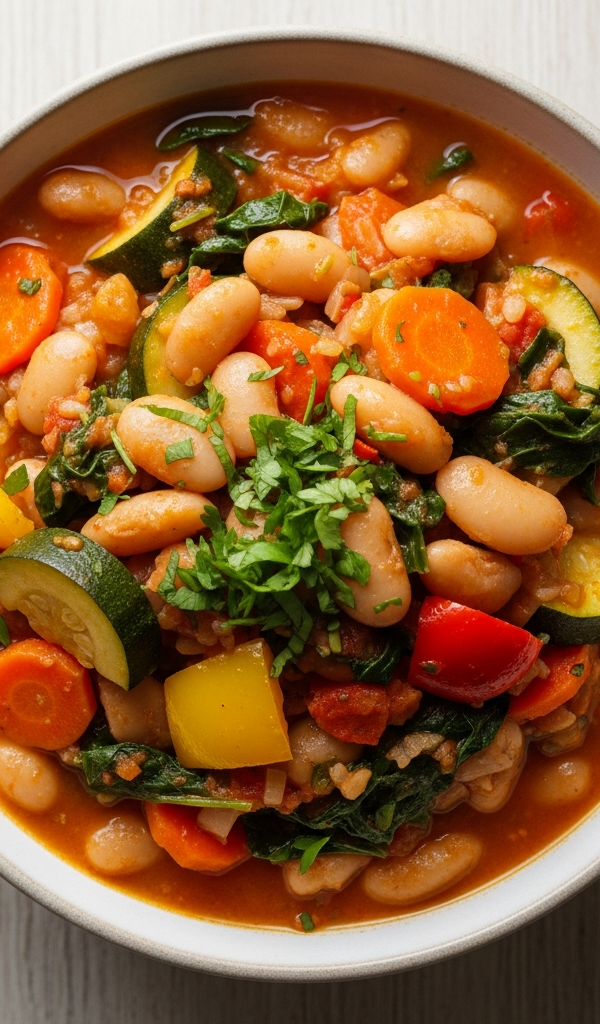
Butter Bean and Vegetable Stew
33g protein, 20 minutes.
 20 min
Cabbage and Lentil Stir-Fry with Rice
Cabbage keeps all week, so this is a Friday dish.
Frequently asked questions
Does eating seasonally actually save money?
Yes, and the mechanism is simple supply. In-season produce is abundant locally, so it is cheap; out-of-season produce has either been stored for months or transported a long way, and both costs appear on the price label. You do not need a calendar to use this - whatever is unusually cheap in the produce section this week is what is in season.
How do I know what is in season?
Look at the prices. The shop is already telling you: the produce that is cheapest and stacked highest is the one there is a surplus of. This is more reliable than a printed calendar, because growing seasons vary by region and the price reflects what is actually available where you are.
What vegetables are cheap all year round?
Onions, carrots, potatoes and cabbage barely move in price across the year and all of them keep for weeks. They are the sensible base of a weekly plan in any season, with the seasonal bargain added on top rather than replacing them.
Are frozen vegetables as good as seasonal fresh?
For cooked dishes, essentially yes - and frozen is seasonal eating. Frozen vegetables are picked at peak season and frozen within hours, which preserves most of their nutrients and is exactly why they stay cheap in months when the fresh version is expensive.