
Meal planning
Meal planning for beginners
A first week of meal planning that survives contact with real life — plan four dinners, not seven, and let leftovers and a repeat night cover the rest.
By Joao Dunlap · · 5 min read

The short version
- Plan four dinners, not seven. The other three are leftovers, a repeat, and one night off.
- Pick meals that share ingredients, so one shop covers the week.
- Write the plan where you will see it — a plan you cannot find is not a plan.
- Judge it after three weeks, not one. Week one is always the worst one.
Almost everyone starts meal planning the same way: seven ambitious dinners, a long shopping list, and a quiet collapse by Wednesday. The problem is not discipline. It is that seven planned dinners assume seven evenings where you feel like cooking, and no week works like that.
A first plan that actually holds looks smaller than you expect. Here is the version to start with.
How to meal plan for the first time
- 1
Count the nights you will really cook
Look at the week ahead and be honest. Late meeting Tuesday, football Thursday, dinner out Saturday — that is three nights gone before you start. Most people cook four to five nights, not seven.
- 2
Write down three meals you already make well
Not new recipes. Things you can cook without reading anything. Your first plan should be almost entirely food you have made before, because the goal in week one is finishing the week, not eating impressively.
- 3
Add one new recipe. Exactly one
A single new dish keeps the week from feeling like a chore, and one failure will not sink the plan. Put it on a night when you are not tired.
- 4
Make them share ingredients
If two meals use the same half-bag of spinach and the same onions, you shop once and throw nothing away. This is the habit that separates meal planning from just writing a list.
- 5
Plan one deliberate leftover night
Cook a double batch of one dinner and eat it again later in the week. It is the cheapest night of the week and it takes no decisions at all.
- 6
Write it somewhere you will actually look
The fridge door, a note on your phone, whatever you check without thinking. A plan you have to go and find is a plan you will stop using by Thursday.
- 7
Shop once, from the list
One shop, the list in hand. Every extra trip is another chance to buy things that were not part of the plan, and those additions are usually where the budget goes.
A first week you can copy
Four cooked dinners, one leftover night, one repeat, one night off. Breakfasts and lunches stay on rotation rather than being planned individually — that is a level-two habit, not a first-week one.
A realistic first week
Monday
- Break
- Whatever you already eat
- Lunch
- Sandwich or last night's leftovers
- Dinner
- Egg fried rice — cook double the rice
Tuesday
- Break
- Same as Monday
- Lunch
- Leftover fried riceLeftovers
- Dinner
- Pasta with lentil tomato sauce
Wednesday
- Break
- Same as Monday
- Lunch
- Leftover pastaLeftovers
- Dinner
- Night off — leftovers, toast, whatever is there
Thursday
- Break
- Same as Monday
- Lunch
- Sandwich
- Dinner
- Black bean and rice skillet — uses Monday's rice
Friday
- Break
- Same as Monday
- Lunch
- Leftover skilletLeftovers
- Dinner
- The one new recipe you picked
Saturday
- Break
- Something slower
- Lunch
- Out, or leftovers
- Dinner
- Repeat the week's best meal
Sunday
- Break
- Something slower
- Lunch
- Leftovers
- Dinner
- Potato and lentil stew — makes tomorrow's lunch
Notice how little of that is new work. Monday's rice becomes Thursday's dinner, Sunday's stew becomes Monday's lunch, and one night is openly given up. That is what makes it survivable.
Six beginner meals worth starting with
Short ingredient lists, one pan, no technique to learn. Every one of these is in the NeatEat library, so the app can drop them straight into your week with the shopping list already costed.
 20 min
Cheap and Cheerful Egg Fried Rice
Leftover rice plus eggs. Twelve minutes, pennies a serving.
 20 min
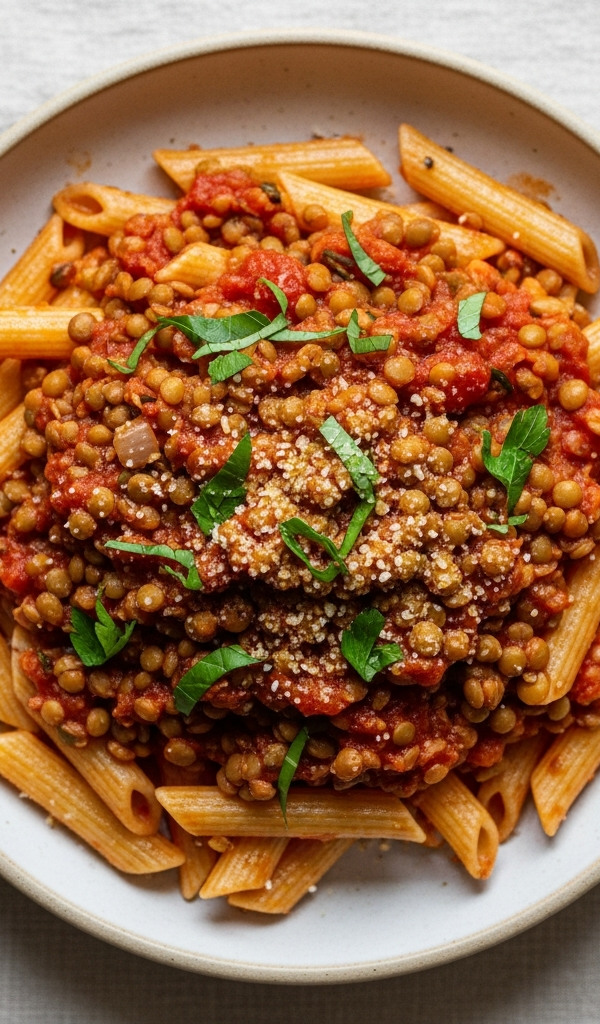
Pasta with Lentil Tomato Sauce
Lentils instead of mince. Nobody notices.
 45 min
Simple Black Bean and Rice Skillet
One pan, under 40 cents of protein a serving.
 20 min
Hearty Potato and Lentil Stew
Makes dinner and the next day's lunch in one pot.
 15 min
Spinach and Cheese Scramble
Fifteen minutes, 20g of protein, three ingredients.
 20 min
Tomato and Chickpea Pasta
Two tins and a bag of pasta.
Beginner mistakes that end the habit
- 1Planning seven dinners. The most common one, and the most fatal. Four is a plan; seven is a wish.
- 2All-new recipes. Every meal being unfamiliar means every meal is slow, and slow meals on a Tuesday lose to takeaway.
- 3No leftover night. Cooking from scratch seven times is more work than most weeks allow, and it is the reason people quit in week two.
- 4Ignoring your actual calendar. A plan that does not know about Thursday football is planning food nobody will eat.
- 5Buying for recipes instead of buying for the week. Seven unrelated recipes means seven unrelated ingredient sets and a drawer of half-used herbs.
- 6Quitting after one bad week. The first week is data, not a verdict. It gets noticeably easier by the third.
Planning by hand vs planning in the app
Your first week alone
Your first week in NeatEat
Decide how many nights you will cook.
Say who you are feeding and how many meals you need.
Remember which meals you can already make.
The week is built from simple everyday recipes by default.
Check by hand that meals share ingredients.
The grocery list merges shared ingredients automatically.
Write the list and hope it fits the budget.
The list is costed as it is built, against your store.
Redo it all next Sunday.
Next week is one tap.
Frequently asked questions
How do I start meal planning as a beginner?
Start by planning four dinners rather than seven. Choose three meals you already know how to cook and one new recipe, make sure they share ingredients so one shop covers them, and plan a deliberate leftover night. Write the plan somewhere you will see it daily and do a single shop from the list.
How many meals should I plan for the first week?
Four dinners. Leftovers cover one night, repeating an easy meal covers another, and one night should be left deliberately unplanned. Planning all seven assumes seven evenings where you feel like cooking, which is why most first attempts collapse mid-week.
Should I plan breakfast and lunch too?
Not in your first weeks. Keep breakfast on a simple rotation and let lunch be leftovers or a sandwich. Planning all three meals at once is where beginners overload the habit. Add lunches once dinners have held for a month.
How long does meal planning take each week?
By hand, about 30 to 45 minutes once you are practised: checking the calendar, choosing meals, writing the list and pricing it. It is slower at first. Using an app that generates the week and the grocery list together takes a couple of minutes.
What if I do not stick to the plan?
Swap meals around rather than abandoning the week - the ingredients are already bought, so moving Thursday's dinner to Friday costs nothing. A plan is an order of operations, not a contract. The only real failure is a second unplanned shop.